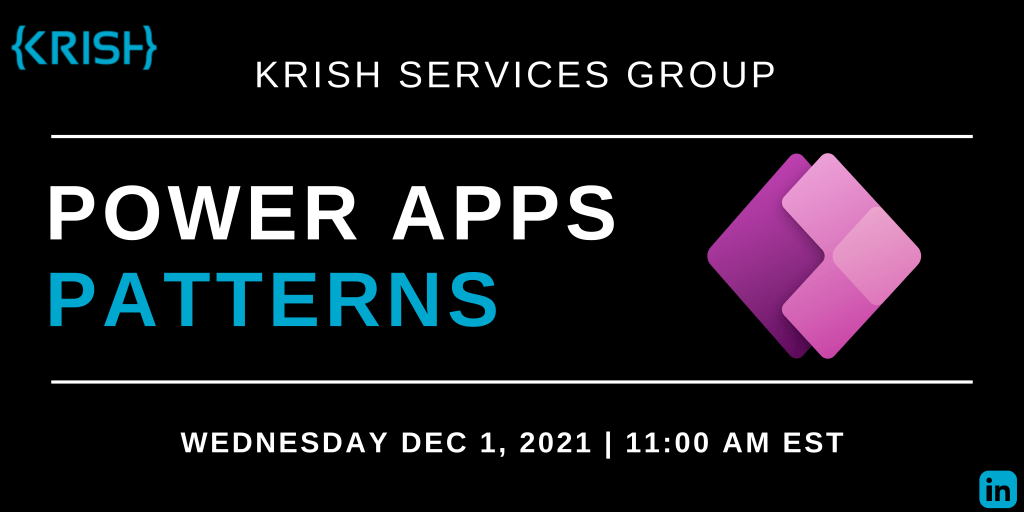
The Microsoft Office 365 Power Platform – Power Apps, Power Automate, Power BI – enables organizations to build low-code solutions that streamline and transform business processes. Microsoft recently announced the rapid increase of Power Platform adoption with first time users of Power Apps growing 50% in March and 70,000 organizations using Power Apps for the first time since January. You have these tools, it’s time to learn how to use them.
In this webinar, you’ll learn about the steps to convert your ideas into a fully working solution by using Power Apps. We will walk you through the process of planning, designing and creating power apps.
Also, we will be going through different patterns we can use for power apps development across different industries. We will be going through below patterns with use cases and demos that include best practices for structuring data and integrating into the overall business.
- Approval Pattern
- Asset management/resource booking pattern
- Calculation/transformation pattern
- Communication/announcement pattern
- Inspection/audit pattern
- Project management pattern
- Scheduling pattern
- Lifecycle or workflow management

Streamline Your Recruiting Process using Microsoft Power Platform
In the modern cloud ecosystem, companies are looking for ways to make their employees more efficient. At the forefront of this charge for Microsoft is Power Platform. Within Power Platform users can find a multitude of ways to streamline business processes via automation to reduce the number of manual tasks required to handle any function of their day-to-day jobs.
One such use case we have come across is the recruiting process for HR departments. In this webinar, we will discuss the particular use case & typical pain points it solves as well as point to the efficiencies gained as a result of implementing this solution within your HR department. By using Power Platform, we can create a solution where candidate details are automatically stored in a secure database by either the candidates or vendors themselves. This ensures all information is securely available to the appropriate HR/recruiting personnel with no data loss in the process.
The key functionality on top of this is a hub where all candidates can be pushed through the recruitment process by the recruiter/HR person with steps such as scheduling interviews, viewing notes from interviewers, and checking scheduling without switching to a different application. In addition, PowerBI reports can be made available based on your use case that can provide data such as candidate source & conversion rates by source. The goal & use case is a centralized hub with multiple levels of automation available to help streamline a specific department’s day-to-day functions, which, if adopted correctly, makes them more efficient.
The Microsoft Office 365 Power Platform – Power Apps, Power Automate, Power BI – enables organizations to build low-code solutions that streamline and transform business processes. Microsoft recently announced the rapid increase of Power Platform adoption with first time users of Power Apps growing 50% in March and 70,000 organizations using Power Apps for the first time since January. You have these tools, it’s time to learn how to use them.
In this webinar, you’ll learn about the steps to convert your ideas into a fully working solution by using Power Apps. We will walk you through the process of planning, designing and creating power apps.
Also, we will be going through different patterns we can use for power apps development across different industries. We will be going through below patterns with use cases and demos that include best practices for structuring data and integrating into the overall business.
- Approval Pattern
- Asset management/resource booking pattern
- Calculation/transformation pattern
- Communication/announcement pattern
- Inspection/audit pattern
- Project management pattern
- Scheduling pattern
- Lifecycle or workflow management