
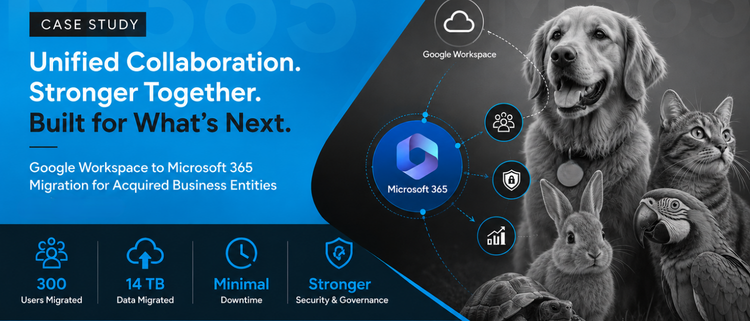
Strengthening Enterprise Governance During Post-Acquisition M365 Migration

Overview

As businesses grow through acquisitions, managing separate IT systems becomes a major operational challenge. One of our US-based clients, a global FMCG and pet care company, faced a similar challenge. After acquiring two pet care firms, the businesses began operating on separate Google Workspace environments. This made collaboration harder and created security and access management challenges. They partnered with us to migrate 300 users and nearly 14 TB of business data to Microsoft 365. This helped simplify collaboration, improve operational visibility, and make IT integration easier across all business entities.

Client Background

The client is a multi-national pet care firm in the US. They have built their business around managing globally recognized consumer and pet care brands and continue to expand through acquisitions. They serve hundreds of consumers, a large customer base, high volumes of business data, shared collaboration environments, and communication systems that are important to daily business operations.

Challenges

  • Complex Shared Drive Permissions: Thousands of shared files carried layered ownership structures and permissions, creating risks around access continuity, governance, and collaboration consistency.
  • Disconnected Collaboration Environments: Different collaboration practices, user structures, and platform dependencies created operational gaps between acquired businesses and enterprise IT standards.
  • Integrity Risks of 14 TB Data: Large-scale migration involving emails, calendars, shared drives, and personal files required careful validation to prevent data inconsistencies or loss.
  • Cross-Platform Identity Mapping Challenges: User identity alignment across platforms required accurate mapping to maintain authentication, permissions, and seamless Microsoft 365 access experiences.
  • Conflict in Business Operations: The migration timeline needed to minimize operational interruptions for distributed teams relying daily on email, shared drives, and collaboration platforms.
  • Identifying Redundant Data: Legacy user accounts, outdated files, and inactive collaboration assets increased migration complexity and impacted overall data management efficiency.

Solutions

  • Migration Readiness Assessment: Used GAM and Google Apps Script to analyze and clean the mailbox, shared drive ownership, inactive accounts, and migration dependencies early.
  • Shared Drive Permission Analysis: Reviewed shared drive ownership and access parameters to ensure employees retained the right collaboration access after migration.
  • Phased Migration Execution: Implemented a planned phased migration strategy to reduce operational risk and maintain business communication during platform migration.
  • Pre-Staged Data Migration: Used CloudFuze to move business data, helping reduce downtime during the final migration process.
  • Migration Validation and Reporting: Used CloudFuze reports and automated checks to validate data accuracy, completeness, and successful migration outcomes.
  • Microsoft 365 Workplace Consolidation: Standardized acquired business environments across Exchange Online, OneDrive, and SharePoint Online migration workloads to strengthen collaboration and scalability.

Tech Stack

  • CloudFuze (Migration Tool)
  • Google Apps Script
  • GAM (Google Application management and analysis)
  • Microsoft 365

Business Value Proposition

  • Reduced Downtime: 90% Reduced migration-related downtime through phased deployment.
  • Migrated Large Amount of Data: Securely transitioned nearly 14 TB of email and collaboration data.
  • Transitioned Large User Base: Enabled uninterrupted onboarding of 300 employees into M365.
  • Faster User Adoption: 80% faster employee adoption by preserving old files and permissions.

Summary

Krish Services created a scalable and secure Microsoft 365 infrastructure without interfering with vital business activities. The move improved the framework for long-term governance and productivity. Now that a uniform digital workplace has been established, the client is in a better position to scale modern workplace work more effectively.
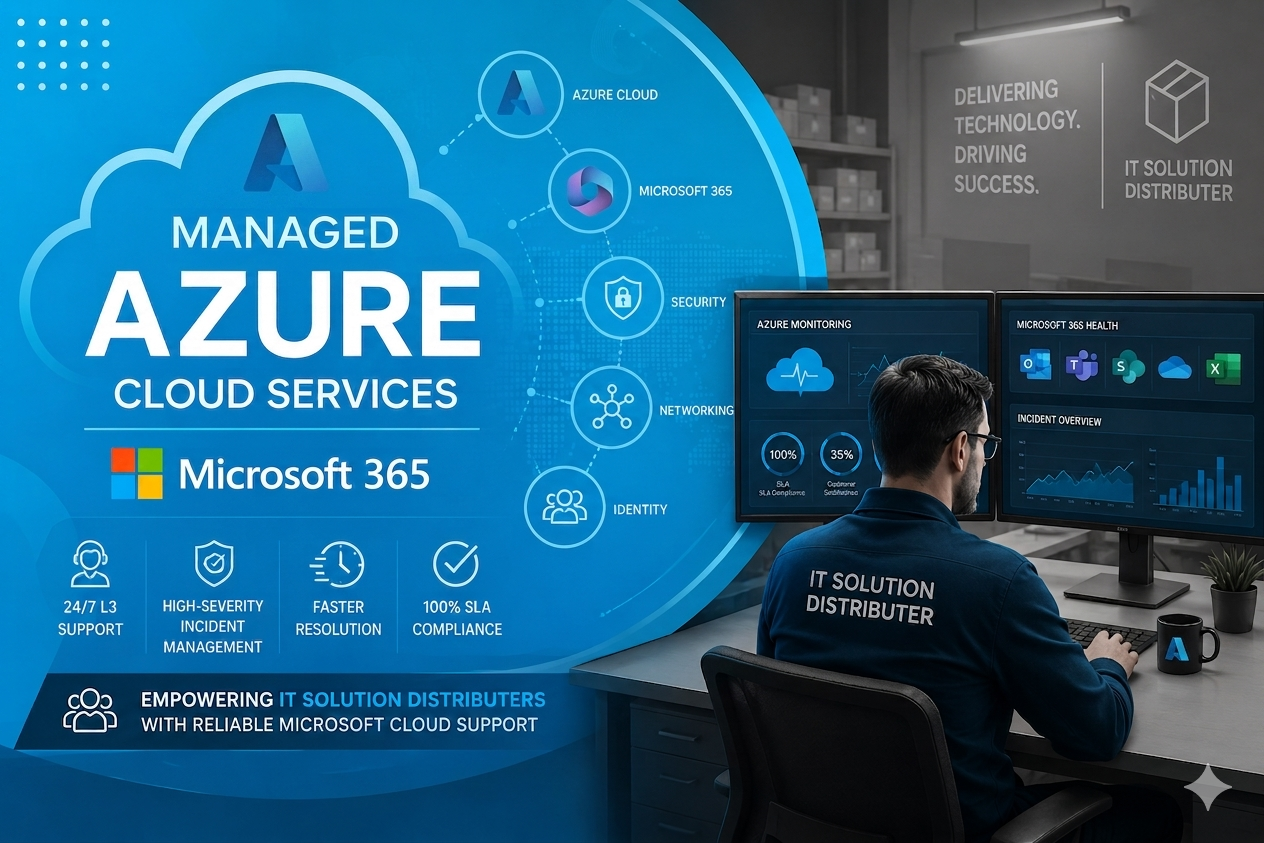
Reducing Cloud Incident Resolution Time Through Azure Managed Services

Overview

When enterprise customers use premium cloud services like Microsoft cloud technologies, support delays can seriously impact their bottom line. In our recent engagement, we worked with a global IT solutions provider managing complex Microsoft cloud environments. Their teams were facing challenges in faster issue resolution across Azure, Microsoft 365, networking, identity, and data platforms while maintaining high customer expectations.

Their internal support teams needed stronger L3 expertise for rapid resolution within SLA and to maintain high customer experience standards.

Client Background

Our client, a US-based technology solutions provider supports enterprises, channel partners, and service providers with technology distribution, managed IT services, and cloud solutions. Operating across 100+ countries, their ecosystem supports large-scale Microsoft cloud, Azure, M365, identity services, networking, and enterprise technology operations.

Challenges

  • Growing Cloud Incidents: Rising P1 and P2 escalations across Azure and Microsoft 365 increased operational load on enterprise support teams.
  • Resolution Delays: Dependence on external Microsoft escalation channels slowed recovery during critical production outages.
  • Limited Cloud Expertise: Supporting Azure, networking, identity, and data environments needed broader multi-domain technical expertise.
  • Complex Incident Management: Cross-technology dependencies made troubleshooting and resolution coordination more difficult during high-priority incidents.
  • SLA Performance Pressure: Maintaining consistent SLA compliance became challenging across large Microsoft cloud environments.
  • Limited Visibility: Slow decision-making due to limited information of cloud technologies.

Our Solutions

  • Centralized M365 Support: We managed Azure VMs, VMSS, networking, SharePoint, Teams, Exchange, Intune, and OneDrive incidents through one dedicated escalation team.
  • Integrated Cloud Security: Entra ID, Conditional Access, Sentinel, Defender, Azure Firewall, ExpressRoute, VPN Gateway, WAF, and Purview issues were resolved collaboratively.
  • Cross-Platform Troubleshooting: Databricks, Synapse, ADF, AKS, APIM, Power BI, Cosmos DB, Containers, and Front Door incidents were handled end-to-end.
  • SLA-Driven 24/7 Support: P1 and P2 incidents followed structured workflows with rapid diagnosis, proactive communication, root cause analysis, and cross-domain expert collaboration.

Technology Stack

  • App Gateway, APIM, AKS
  • Databricks, ADF, Synapse, Azure Data Lake, Microsoft Fabric, Power BI
  • Azure SQL, MySQL, Postgres SQL, SQL VM and Cosmos DB
  • Azure VMs, Azure Stack HC
  • Microsoft 365
  • Sentinel, Defender

Business Value Propositions

  • Faster Incident Resolution: Reduced high-severity incident resolution timelines by over 35% across Microsoft cloud environments.
  • Stronger SLA Performance: Maintained near-perfect SLA adherence for critical Azure and Microsoft 365 support escalations.
  • Improved Operational Efficiency: Reduced downtime, improved responsiveness, and improved overall customer satisfaction levels.

Future Opportunities

By centralizing Azure and Microsoft 365 escalations under one experienced support team, the client improved operational response, reduced dependency on external escalations, and improved overall service consistency across critical environments. The next phase includes Microsoft Copilot readiness, automation-led operations, and more proactive cloud management across enterprise environments.

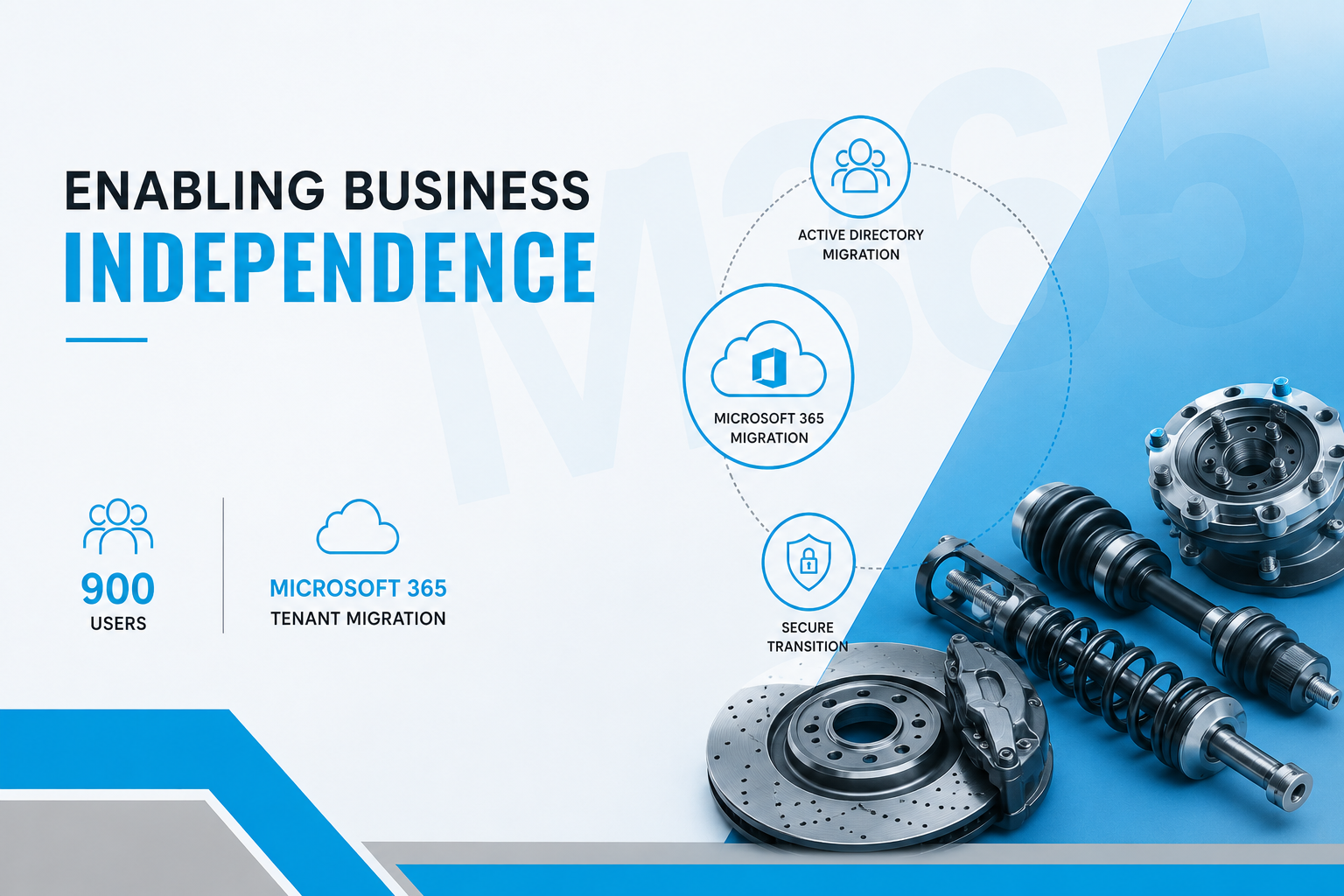
Enabling a Dedicated Environment from Shared Enterprise Infrastructure via Microsoft 365 Migration

Overview

A global automobile manufacturer was restructuring one of its business units to operate independently. This unit, with close to 900 users, was tied to the parent company’s Active Directory forest and Microsoft 365 tenant. This slowed down decision-making and provided limited control over identity and access. Hence, they partnered with Krish for a smooth migration program, i.e., a full Microsoft 365 tenant-to-tenant migration.

Client Background

Our client is a business unit of a large multinational automotive enterprise that comprises a large employee base who work together across various departments, such as operations, engineering, and corporate responsibilities. Their daily operations relied on enterprise email, team collaboration tools, centralized identity management, and SharePoint document management.

Challenges

  • Risk of Business Disruption During Separation: Moving out of a shared Active Directory forest created a real risk of downtime, directly threatening ongoing operations and workforce productivity.

  • Uncertainty Around User Access: User identities, permissions, and access could break across environments, potentially locking employees out of systems and delaying business operations.

  • Risk of Communication Breakdown: Email, Teams, and SharePoint migration raised concerns of inefficient communication, slowed coordination, and disturbed delivery timelines.

  • Fear of Data Loss: Any data loss or mismatch during migration could impact compliance, audit readiness, and leaders’ visibility.

Solutions

  • Mapped Business Dependencies: Assessed AD structure, Azure AD Connect sync, and Microsoft 365 workloads to identify risks related to user access.
  • Design Built for Clean Separation: Designed a new domain and Microsoft 365 tenant, using ADMT-based migration, SID history, and Azure AD Connect to keep everything running smoothly for users.
  • Validation Through Pilot Version: Migrated a small user group, including mailboxes, Teams, and SharePoint data, using AvePoint Fly to test access, communication, and collaboration workflows.
  • Phased Migration Across Workload: Moved users, devices, emails, files, and collaboration tools in batches to maintain system availability and avoid operational downtime.
  • Validation and Stabilization Post-Migration: Verified user access, email flow, file availability, etc., in AD, Exchange, Teams, and SharePoint to ensure the business operated smoothly in the new setup.

Tech Stack

  • ADMT (Active Directory Migration Tool)
  • AvePoint Fly
  • Microsoft 365 (Exchange, SharePoint, Teams)
  • Active Directory
  • Azure AD Connect Tool

Business Value Propositions

  • Complete Data Integrity: Migrated with 100% integrity, ensuring compliance and reporting accuracy.
  • Zero Disruption Throughout Migration: Migration executed with near-zero disruption, keeping business operations running.
  • Secure and Consistent User Access: Maintained secure authentication and uninterrupted workflows.
  • Stronger Control and Governance: Better visibility and control over users, data, and policies.
  • Better Security Foundation: Reduced identity-related risks by over 60%, improving overall security posture and minimizing exposure to unauthorized access.

Final Perspective

Krish Services carried out a planned migration of large number of users between environments, ensuring a safe identity transfer and continuous cooperation.

This boosted operational control, increased governance, and put the business unit in a position to operate business flexibly. The company is now prepared to handle upcoming expansion plans, improve security, and streamline operations.

Building a Secure and Cost-Efficient Data Platform with Azure

Overview

A mid-sized U.S. financial organization was running critical data and reporting on an on-premises SQL Server setup that started to struggle as the business grew. They faced significant challenges in scaling the system, meeting strict compliance requirements, and maintaining data security. We migrated their databases and SSIS workloads to Azure, providing them with a more secure, scalable, and cost-effective setup that supports better reporting, automation, and compliance.

Client Background

A mid-sized U.S.-based financial services organization handled large volumes of financial data across transactional systems and reporting functions. These operations were supported by multiple interconnected databases and data processing workflows critical to daily business operations.

Challenges

  • Legacy Setup Holding Back Operations: Their on-prem SQL Servers needed constant manual maintenance, and SSIS jobs were tightly tied to the same setup, making changes and scaling difficult.
  • Security and Compliance Pressure: They had to meet strict financial regulations, ensure strong access control, and avoid any public exposure, which made the existing setup harder to manage.
  • Rising and Unnecessary Costs: The infrastructure led to higher compute costs without actual usage or business value.

Solutions

  • Moving to a Flexible Cloud Setup
    We moved their data and workflows to Azure using Azure SQL Managed Instance and Azure Data Factory, making the system easier to scale and manage.
  • Streamlined Data Flow and Updates
    Data flow was automated using Azure Data Factory and Logic Apps to handle updates and notifications without manual effort or constant monitoring.
  • Automation to Reduce Costs
    Automated system start & stop schedules, ensuring resources run only when needed and reducing unnecessary costs.
  • Strong and Simple Security Setup
    Built a private, secure setup using a managed VNET, private endpoints, and identity-based access to protect sensitive financial data.

Business Value Proposition

  • Smooth and Reliable Data Migration
    Moved 100GB data to Azure with minimal disruption and stable performance.
  • Faster and Simpler Data Processing
    Replaced older processes, improving data flow speed by around 25%.
  • Less Manual Work with Automation
    Automated data updates and alerts, reducing manual effort by nearly 30%.
  • Lower Infrastructure and Running Costs
    Optimized usage reduced overall system costs by approximately 20- 25%.

Final Perspective

Krish turned a rigid, high-maintenance setup into a secure, flexible system, improving reliability, reducing costs, and making daily operations smoother, while helping the business handle growth and compliance with far less effort.

Securing Analytics in Manufacturing Unit Using Azure Private AI Platform

Overview 

The company needed a secure internal chatbot that could answer questions about Snowflake data without using the public internet. It also had to meet strict security standards. We built a private setup on Microsoft Azure that allowed employees to safely search company data while keeping all systems protected and controlled. 

Client Background 

A large, US-based design and manufacturing company with more than 6,000 employees utilizes Snowflake to manage data across engineering, finance, and operations. They needed a secure method for employees to access company data through a private internal AI system. 

Challenges 

IP Theft Risk: The company stored high-value design and manufacturing data that must stay safe from leaks or misuse. 

No Secure Data Tool: Employees did not have a safe internal system to search and use company data easily. 

Public Exposure Risk: Connecting systems through the public internet increased the risk of cyber-attacks and data breaches. 

Compliance Pressure: The company had to meet NIST 800-53, CMMC Level 2, ISO 27001, and SOC 2 security standards. 

Weak Access Control: They needed a system where every user must be verified before accessing sensitive company data. 

Unsafe System Connectivity Risk: Azure services and Snowflake needed a fully private and secure connection without public access. 

Solutions

1. Private and Secure Platform Setup

Deployed a Private Cloud Environment: Built a fully private setup on Microsoft Azure with no public internet exposure. 

Secured Enterprise Chat Access: Deployed a private chatbot using Azure OpenAI and ChatGPT 5.2 Turbo model securely. 

Protected Snowflake Connectivity: Connected Snowflake through Private Link to keep all data traffic internal. 


2. Strong Access and Network Protection

Secured Traffic Management: Implemented Azure Application Gateway with WAF and OWASP 3.0 rules protection. 

Controlled Internal Networking: Configured Private Endpoints, Hub Spoke model, DNS zones, and Network Security Groups. 


3. Data Security and Compliance Control

Secured Secrets and Encryption: Stored keys in Azure Key Vault with Managed Identity and full encryption. 

Governed Query Processing: Azure Functions validated users, generated controlled SQL, and returned safe responses. 

Compliance and Monitoring Alignment: Aligned with NIST 800 53, CMMC Level 2, ISO 27001, and SOC 2 standards. 

Business Value Proposition 

  • 60% Faster Insights: Enabled employees to access analytics 60% faster across departments. 
  • 70% Lower Attack Surface: Reduced exposed systems by 70% through private network design. 
  • Serverless Cost Optimization: Reduced infrastructure and maintenance costs. 

Final Perspective 

The company now operates with stronger security, faster access to data, and reduced risk exposure. Teams work with better visibility across systems and make better decisions while keeping sensitive information fully protected. 

Next, the focus will be on adding RAG, Microsoft Purview integration, anomaly detection, and stronger data classification to further improve control and oversight. 

Centralized Reporting for a Hotel Group with Azure Synapse

Overview

A luxury hospitality group in Southeast Asia struggled to combine data coming from many systems and file types. Reports took days and delayed decisions. Krish Services Group built a modern analytics platform on Microsoft Azure. Leaders could view key business metrics within hours, helping teams act faster and manage properties more effectively.

Client Background

The client operates large number of hotels, resorts, and serviced apartments across Southeast Asia. Each property tracks occupancy, revenue, costs, and guest satisfaction using different tools and local systems. Data was spread across countries, languages, and formats, making it hard for leadership to get a single, clear view of business performance.

Challenges

  • Data Silos Across Systems: Critical data was stored in flat files, SharePoint lists, and SQL databases, resulting in slow and error-prone reporting.
  • Manual ETL Pipelines: Data was cleansed and combined manually in Excel, with no automation or lineage tracking.
  • Delayed Access to Insights: Reports were refreshed weekly, which limited the ability to respond to performance changes in real-time.

Solutions

  • Azure Synapse Implementation: We built a centralized SQL pool using Azure Synapse Analytics to ingest and manage data from multiple sources.
  • Data Factory Pipelines and Cleansing: ADF and mapping data flows were used to automate transformations, deduplication, and quality checks.
  • Power BI Dashboards: Visual dashboards enabled daily tracking of revenue, bookings, occupancy, and customer satisfaction metrics.

Technology in Use

Azure Data Lake

Azure Synapse Analytics

Azure Data Factory

Power BI

Business Value Propositions

  • Faster Reporting Cycles: Reduced report refresh time from hours to a few hours, enabling same-day business reviews.
  • Improved Data Governance: Established clear data controls and audit trails, improving trust and accountability for leadership teams.
  • Wider Data Visibility: Enabled consistent access to key metrics across departments through centralized dashboards and reporting.
  • AI-Ready Data Foundation: Created a structured data platform that supports future forecasting and advanced analytics initiatives.

Final Perspective

To facilitate quicker, data-driven operational and financial choices, Krish Services Group provided a scalable Azure analytics platform that unified complicated hospitality data, increased reporting speed, and offered leadership across hotels and resorts with timely, dependable insights.

Improving API Governance and Developer Experience Using Azure

Overview

A large utility provider runs many customer and internal systems using APIs. As their digital services expanded, managing security and access became difficult. They approached Krish Services to implement Azure API Management, creating a central platform that improved security controls, simplified integrations, and gave teams better visibility and control across all APIs.

Client Background

The client is a utility provider delivering power and energy services across multiple regions. Their operations depend on customer portals, internal applications, and partner systems that exchange data through hundreds of APIs. These systems support daily service delivery, billing, monitoring, and customer interactions across a wide digital ecosystem.

Challenges

  • Uncontrolled API Expansion: Different teams built and published APIs separately, with no central visibility, shared standards, or consistent monitoring across environments.
  • Security and Compliance Gaps: APIs used mixed authentication methods, weak access controls, and undocumented endpoints, increasing security exposure and audit risks.
  • Limited API Visibility and Governance: Operations teams lacked a single view to track API usage, performance, versioning, and ownership across internal and external systems.
  • Slow Partner and Developer Onboarding: Partners had no central portal or clear documentation, causing confusion, repeated questions, and longer integration timelines.

Our Solution 

  • Azure API Management Implementation: We centralized all API endpoints under Azure API Management, standardizing access, tracking, and throttling rules.
  • Security and Policy Enforcement: OAuth2 authentication, IP whitelisting, and logging policies were applied across environments for consistency and control.
  • Developer Portal Launch: A branded portal was deployed, offering self-service documentation, test consoles, and onboarding workflows for developers.

Our Solution 

  • Azure API Management Implementation: We centralized all API endpoints under Azure API Management, standardizing access, tracking, and throttling rules.
  • Security and Policy Enforcement: OAuth2 authentication, IP whitelisting, and logging policies were applied across environments for consistency and control.
  • Developer Portal Launch: A branded portal was deployed, offering self-service documentation, test consoles, and onboarding workflows for developers.

Technology in Use

Azure API Management 

Azure DevOps 

OAuth2 

Azure Monitor 

Developer Portal 

Business Outcomes

  • Stronger API control and visibility: Gained centralized control over more than 100 APIs, with clear ownership.
  • Faster partner and developer onboarding: Reduced onboarding time by 40% through a single developer portal.
  • Improved security and audit readiness: Applied consistent security policies and access controls, making APIs easier to audit.
  • Quicker integration delivery: Enabled teams to launch new integrations faster without breaking existing systems or compliance requirements.

Final Perspective

Krish Services Group implemented Azure API Management to centralize APIs, strengthen security, and simplify integrations, helping the client scale digital services confidently and achieve long-term operational efficiency.

Driving Energy Efficiency Using Azure IoT Analytics

Overview

A global energy services company collaborates with large facilities to utilize IoT sensors and track energy usage. As data volumes grew, their systems struggled to provide timely insights. They partnered with Krish Services to build an Azure-based analytics platform that turned sensor data into clear signals, enabling early action, lower costs, and better energy efficiency.

Client Background

The client is a global provider of smart energy services for industrial customers. They deploy sensors across buildings and equipment to track energy usage, improve performance, and support sustainability goals. Their focus is on helping organizations lower energy costs, reduce waste, and operate more efficiently across large, distributed environments.

Challenges

  • Disconnected IoT Data Sources: Unreliable analysis and a lack of a trusted operational view due to sensor data arriving in different formats across sites.
  • Delayed Real-Time Monitoring: Delayed visibility into energy spikes and device failures due to batch processing, causing higher costs, slower responses, and missed efficiency opportunities daily.
  • Inability to Scale Data Processing: Legacy infrastructure could not handle growing IoT data volumes, restricting expansion, increasing risk, and limiting future analytics capabilities for the business.

Solutions

  • Centralized IoT Data Platform: Built an Azure data lake with Databricks to ingest, clean, and analyze sensor data, enabling reliable anomaly detection at scale.
  • Real-Time Operational Dashboards: Delivered Power BI dashboards showing live energy metrics across sites, helping teams spot issues faster and act quickly and confidently.
  • Scalable Streaming Architecture: Designed a scalable Azure architecture to process millions of records daily, supporting alerts, growth, and future sensor expansion reliably and securely.

Technology in Use

Azure Data Lake 

Azure Databricks 

Azure Synapse Analytics 

Azure Event Hub 

Power BI 

Business Value Propositions

  • Predictive Maintenance Enablement: Early anomaly detection helped teams address equipment issues before failures, reducing unplanned outages and maintenance surprises.
  • Lower Energy Waste and Downtime: Real-time monitoring reduced energy spikes and downtime, improving operational efficiency and controlling ongoing operational costs.
  • Sustainability Visibility: Clear dashboards gave leaders visibility into energy usage patterns, supporting sustainability targets and carbon reduction initiatives.
  • Future-Ready Data Platform: A flexible architecture allows easy onboarding of new sensors without redesigning systems or disrupting operations.

Final Perspective

We unified IoT data on Azure, enabling predictive maintenance and energy savings today, while preparing scalable analytics that will improve sustainability, reliability, and faster decision-making across future operations globally.

Centralized Payroll and HR Data for an Australian Company via Microsoft Fabric

Overview

A large community services provider in Australia needed timely and accurate insights from its HR and payroll systems. We implemented a Microsoft Fabric data warehouse that combined data from several sources into one place. This decreased manual reporting, enhanced data accuracy, and gave leadership real-time visibility to support better decisions and compliance.

Client Background

Our client delivers aged care, disability support, and family services across several regions in Australia. Their HR and payroll data were spread across different systems, making reporting slow and inconsistent. Teams relied on manual spreadsheets to prepare reports, which increased effort and risk. They needed a more reliable and unified way to manage workforce data.

Challenges

  • Inconsistent Workforce Data: HR and payroll data lived across multiple systems and APIs, making it difficult to create a single view for reporting and compliance.
  • Manual and Time-Consuming Reporting: Teams relied heavily on spreadsheets and exports, spending hours preparing reports and validating numbers instead of focusing on operational work.
  • No Real-Time Visibility for Leadership: Decision-makers lacked access to live workforce data, limiting their ability to track trends, respond quickly, and plan across regions and departments.

Solutions

  • Modern Data Platform with Microsoft Fabric: Created a data warehouse (Microsoft Fabric) to securely ingest data from 19 Zambion Payroll APIs, enabling unified payroll analytics and real-time business insights through Power BI dashboards.
  • Power BI Semantic Modelling: Star-schema models were built on top of the dataset to enable intuitive reporting and drill-down analytics.
  • Governance and Security Controls: Implemented Microsoft Purview, Row-Level Security (RLS), and role-based access controls to maintain compliance with Australian privacy standards.

Technology in Use

  • Microsoft Fabric
  • Power BI
  • Zambion APIs
  • Azure Data Pipelines
  • Microsoft Purview

Business Value Propositions

  • Real-Time Workforce Insights: Leaders could access live HR and payroll data to plan staffing, budgets, and resource needs accurately.
  • Faster Reporting Cycles: Reduced report preparation time from 12 hours to under 1 hour with automated pipelines.
  • Stronger Data Governance: Improved data accuracy, audit readiness, and compliance with organizational governance standards through centralized controls.
  • Self-Service for Leaders: Secure access to trusted reports and dashboards without relying on manual data requests.

Final Perspective

By unifying HR and payroll data into a governed, real-time platform, we simplified reporting, improved visibility, and helped leaders make faster, more confident workforce decisions.

Modernizing Matrimony Platform with Secure Governance and Scalable Azure

Overview

For one of our clients, a non-profit organization, we upgraded an old WordPress-based matrimony website. The existing system was hard to manage, slow to use, and risky for handling personal data. We redesigned the platform with a modern application setup that was safer, more user-friendly, and scalable. It also made daily operations easier for both users and administrators.

Client Background

Our client is a non-profit organization based in India that supports a church community through matrimony services. They manage member profiles, matching activities, and communication between families. Their work involves handling personal and sensitive information, so trust and data safety are critical.

As the community grew, they needed a system that was reliable, easy to manage, and secure. Their aim was to update the platform without losing the user experience.

Challenges

  1. Growth and System Limits: The existing platform struggled as users and data increased, leading to slow responses and frequent strain during peak activity.
  2. Hard-to-Manage Platform: Small changes took too long because custom updates were complex, fragile, and often disrupted daily operations.
  3. Data Security and Trust Risks: Personal information lacked modern protection, increasing risk and making it harder to meet today’s security expectations.
  4. Performance and Workflow Gaps: Slow page loads, rigid processes, and unreliable background tasks reduced staff productivity and affected timely communication with users.

Solutions

  1. Modern, Scalable Foundation: The old WordPress platform was migrated to a rebuilt modular setup with clean APIs that supported growth, simplified changes, and removed long-term technical risk.
  2. Strong Data Protection and Access Security: Sensitive profiles and files were encrypted, with controlled access and clear tracking to reduce exposure.
  3. Proactive Monitoring and Stability: The system remained stable, and activities were operational due to built-in monitoring and warnings that helped identify problems early.
  4. Smarter Automated Workflows: Matching steps and notifications were streamlined to reduce manual effort and ensure timely communication across channels.

Technology in Use

.NET 8 Web API (Backend)
Angular (Frontend)
Azure App Service
Azure SQL
Azure Blob
SendGrid
JWT-based authentication

Business Value Propositions

  1. Security and Trust: Increased security for private data, which enhanced trust among stakeholders and users.
  2. Operational Effort Reduced: Automated workflows reduced manual coordination by approximately 20-30% across profile reviews, notifications, and routine follow-ups.
  3. Stable Performance: Page response times improved by 30-40%, with consistent performance during higher user activity periods.
  4. Lower Support and Maintenance Load: Support tickets and routine fixes were reduced by nearly 25%.
  5. Reduced Overhead Cost: Optimised hosting and managed services helped lower monthly infrastructure costs by 10–15%.

Future Perspective

The modernization focused first on building a secure, stable foundation that could support daily operations without risk or delays.

Further, the platform will introduce role-based privacy controls, configurable workflow modules, and integrated analytics dashboards. These additions will help the client manage sensitive data more precisely, adapt matchmaking processes faster, and gain clear visibility into engagement.


Thank you for contacting us. Our team will contact you shortly.