
Overview
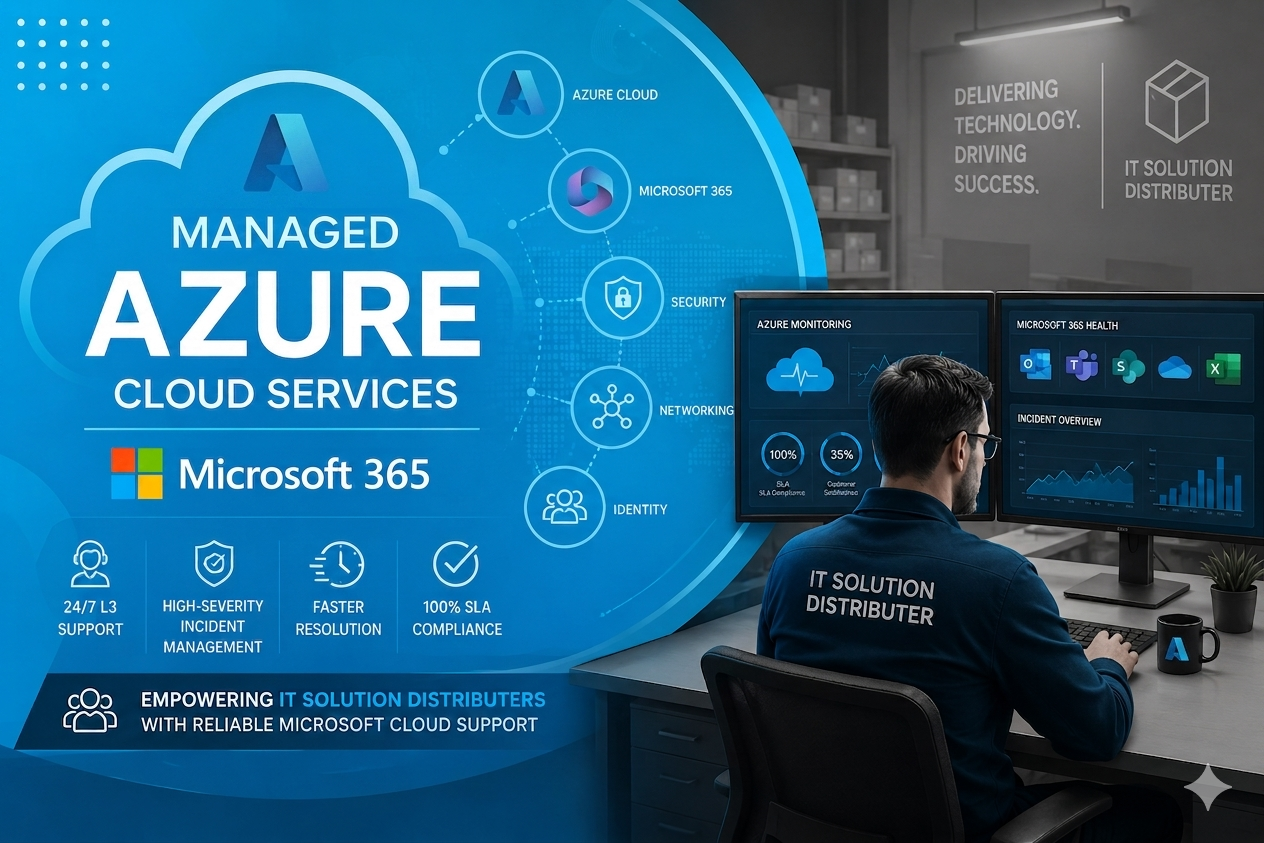
When enterprise customers use premium cloud services like Microsoft cloud technologies, support delays can seriously impact their bottom line. In our recent engagement, we worked with a global IT solutions provider managing complex Microsoft cloud environments. Their teams were facing challenges in faster issue resolution across Azure, Microsoft 365, networking, identity, and data platforms while maintaining high customer expectations.
Their internal support teams needed stronger L3 expertise for rapid resolution within SLA and to maintain high customer experience standards.
Client Background
Our client, a US-based technology solutions provider supports enterprises, channel partners, and service providers with technology distribution, managed IT services, and cloud solutions. Operating across 100+ countries, their ecosystem supports large-scale Microsoft cloud, Azure, M365, identity services, networking, and enterprise technology operations.
Challenges
- Growing Cloud Incidents: Rising P1 and P2 escalations across Azure and Microsoft 365 increased operational load on enterprise support teams.
- Resolution Delays: Dependence on external Microsoft escalation channels slowed recovery during critical production outages.
- Limited Cloud Expertise: Supporting Azure, networking, identity, and data environments needed broader multi-domain technical expertise.
- Complex Incident Management: Cross-technology dependencies made troubleshooting and resolution coordination more difficult during high-priority incidents.
- SLA Performance Pressure: Maintaining consistent SLA compliance became challenging across large Microsoft cloud environments.
- Limited Visibility: Slow decision-making due to limited information of cloud technologies.
Our Solutions
- Centralized M365 Support: We managed Azure VMs, VMSS, networking, SharePoint, Teams, Exchange, Intune, and OneDrive incidents through one dedicated escalation team.
- Integrated Cloud Security: Entra ID, Conditional Access, Sentinel, Defender, Azure Firewall, ExpressRoute, VPN Gateway, WAF, and Purview issues were resolved collaboratively.
- Cross-Platform Troubleshooting: Databricks, Synapse, ADF, AKS, APIM, Power BI, Cosmos DB, Containers, and Front Door incidents were handled end-to-end.
- SLA-Driven 24/7 Support: P1 and P2 incidents followed structured workflows with rapid diagnosis, proactive communication, root cause analysis, and cross-domain expert collaboration.
Technology Stack
- App Gateway, APIM, AKS
- Databricks, ADF, Synapse, Azure Data Lake, Microsoft Fabric, Power BI
- Azure SQL, MySQL, Postgres SQL, SQL VM and Cosmos DB
- Azure VMs, Azure Stack HC
- Microsoft 365
- Sentinel, Defender
Business Value Propositions
- Faster Incident Resolution: Reduced high-severity incident resolution timelines by over 35% across Microsoft cloud environments.
- Stronger SLA Performance: Maintained near-perfect SLA adherence for critical Azure and Microsoft 365 support escalations.
- Improved Operational Efficiency: Reduced downtime, improved responsiveness, and improved overall customer satisfaction levels.
Future Opportunities
By centralizing Azure and Microsoft 365 escalations under one experienced support team, the client improved operational response, reduced dependency on external escalations, and improved overall service consistency across critical environments. The next phase includes Microsoft Copilot readiness, automation-led operations, and more proactive cloud management across enterprise environments.